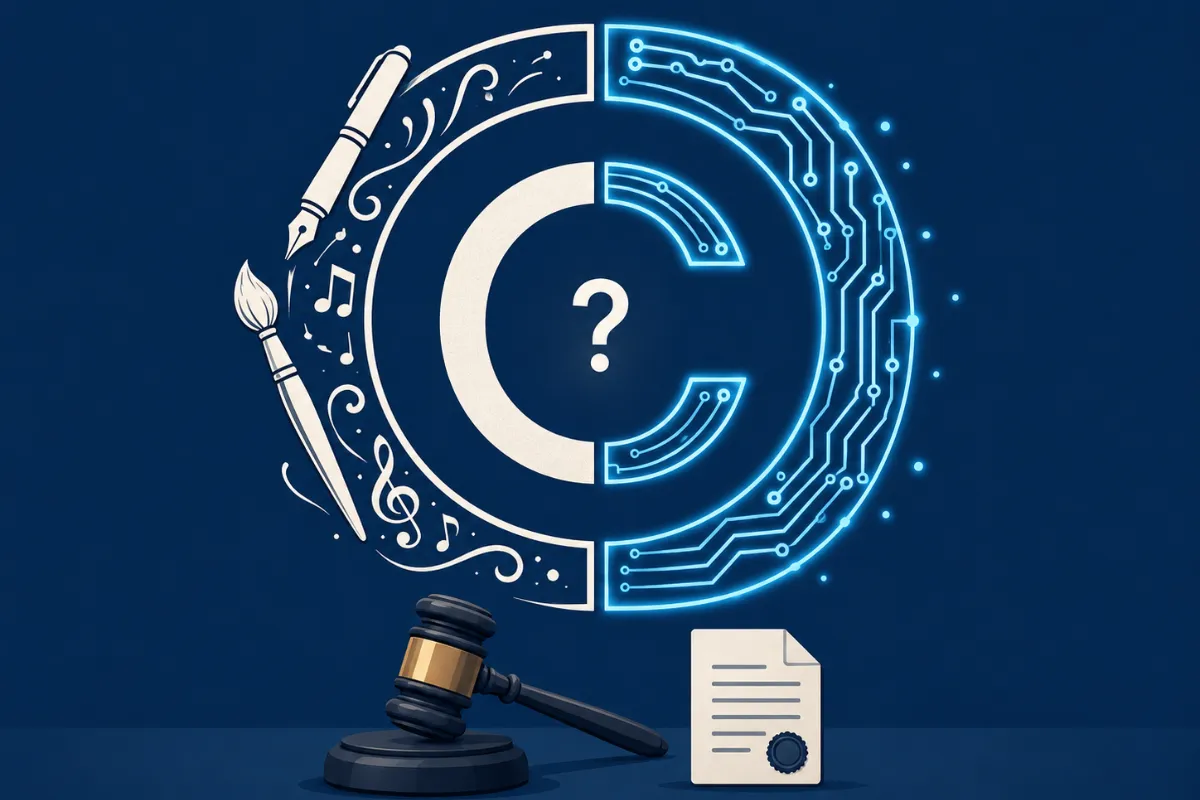
Direct Answer: Under current law in the United States, the European Union, and the United Kingdom, purely AI-generated content cannot be copyrighted because copyright requires a human author. If a person contributes meaningful creative input while using AI as a tool, the human-authored parts of the work may qualify for protection but the AI-generated portions do not.
AI copyright who owns the work it’s a question that millions of creators, marketers, and business owners are asking right now. Every day, people generate blog posts with ChatGPT, design logos with Midjourney, and produce music with AI tools. Most of them have no idea whether they actually own what they just made, whether they can sell it, or whether someone else can copy it without consequence. The legal answer depends on where you live, how much creative control you had over the final product, and which country’s rules apply. This guide breaks down the current state of AI copyright law across three major jurisdictions and explains what it means for anyone using AI to create content. If you’re also wondering how personal data rules intersect with these emerging tech laws, check out our What Is GDPR and Why Should You Care? guide.
The Short Version
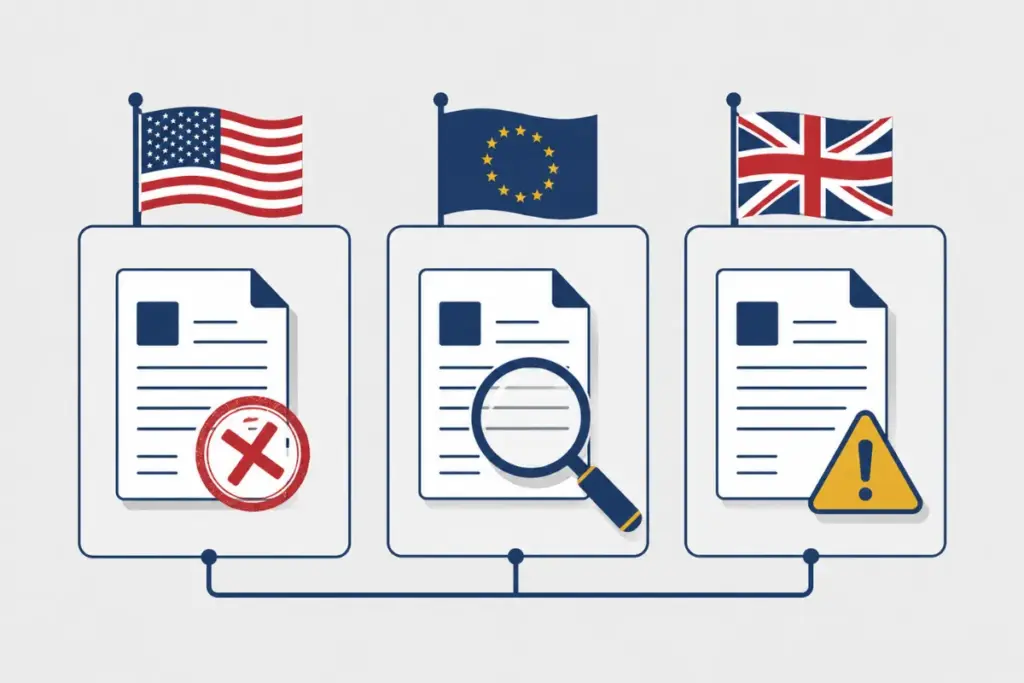
- Purely AI-generated works where a machine made all the creative decisions have no copyright owner in the US, EU, or UK. Anyone can copy and use them freely.
- AI-assisted works where a human makes meaningful creative choices and uses AI as a tool can be copyrighted, but only the human-created parts get protection.
- In March 2026, the US Supreme Court refused to hear the Thaler v. Perlmutter case, cementing the rule that only humans can be copyright authors under US law.
- The EU focuses on transparency and creator protection through the AI Act and Copyright Directive, while the UK is proposing to remove its existing protection for “computer-generated works” to align with international standards.
What AI Copyright Actually Means Under the Law
The question of AI copyright who owns the work doesn’t have a single global answer. Copyright law is territorial it depends on which country’s rules apply. Here’s how the three biggest jurisdictions are handling it.
United States: Human Authorship Is Non-Negotiable
The US position is now the clearest of the three.
The US Copyright Office has maintained since at least 2023 that copyright protection requires human authorship the idea that a real person must make the creative decisions behind a work. This isn’t new. US courts have rejected copyright claims from non-human authors before, including a monkey who took a selfie and a book allegedly dictated by celestial beings.
What changed in 2026 is that the US Supreme Court made this rule harder to challenge. On March 2, 2026, the Court denied certiorari (declined to review) the case of Thaler v. Perlmutter. Dr. Stephen Thaler had tried to register an artwork created entirely by his AI system, DABUS, with zero human creative input. He argued the AI’s owner should receive copyright. Every court that heard the case disagreed.
The DC Circuit held that US copyright law “protects only works of human creation.” The Supreme Court’s refusal to hear the appeal locked that decision in place.
But here’s the part that trips people up: this ruling does not mean you can never copyright anything made with AI. The Copyright Office has registered “hundreds” of works that incorporate AI-generated material as long as a human author is present and contributes creative input. The key distinction:
- Purely AI-generated = no copyright. Nobody owns it. It’s effectively in the public domain.
- AI-assisted = the human-authored elements can be copyrighted, but the AI-generated portions cannot.
The landmark example is the graphic novel Zarya of the Dawn by Kris Kashtanova. In 2023, the Copyright Office registered the text and the “selection, coordination, and arrangement” of the book but stripped copyright protection from the individual Midjourney-generated images. The human’s creative choices got protection. The AI output did not.
A case to watch is Allen v. Perlmutter, where artist Jason Allen is challenging the Copyright Office’s refusal to register Théâtre D’opéra Spatial, an image he created using hundreds of iterative Midjourney prompts and extensive post-processing in Photoshop. Unlike Thaler, Allen argues his creative process selecting from thousands of outputs, editing, and refining amounts to human authorship. The Copyright Office disagrees. This case could define how much human involvement is “enough.”
The Prompt Question
Many people assume that writing a detailed prompt makes them the author of what the AI produces. The Copyright Office has pushed back on this. Its position is that a prompt functions more like an instruction to a contractor than a creative act. Typing “paint a sunset over mountains in the style of Monet” doesn’t give you the same legal standing as someone who actually painted a sunset.
The more creative decisions you document which variations you rejected, what you edited by hand, what original elements you added the stronger a claim becomes. But as of mid-2026, no US court has ruled that prompts alone are enough for copyright.
European Union: Transparency and Creator Protection
The EU approaches the AI copyright question differently. While it shares the basic principle that copyright requires a human author (rooted in the concept of the author’s “own intellectual creation” under EU case law), the EU has put far more energy into regulating the inputs side what goes into training AI models.
Two major pieces of legislation are shaping the landscape:
The EU Copyright Directive (2019) includes exceptions for text and data mining (TDM) the process of scraping and analyzing large datasets, which is how AI models are trained. Under the Directive, rights holders can opt out of having their work used for commercial TDM purposes. AI developers must check whether a data source has a copyright reservation and exclude or license that content before using it.
The EU AI Act (2024), which is being phased in through 2026 and becomes fully applicable in August 2026, adds transparency obligations on top. Providers of general-purpose AI models (including large language models like GPT) must:
- Publish a public summary of the copyrighted content used for training
- Comply with EU copyright rules, including the opt-out mechanism
- Label AI-generated content so users can tell it’s artificial
In early 2026, the European Parliament went further, proposing a European register of every copyrighted work used to train AI models, mandatory creator opt-out rights, and fair remuneration (payment) frameworks for creators whose work is used. These proposals were still moving through the legislative process as of mid-2026, but if adopted, they would represent the strongest creator-protection framework for AI copyright anywhere in the world.
On the question of output ownership, EU law has not produced a definitive ruling yet. A preliminary reference to the Court of Justice of the EU (CJEU) is pending the first time Europe’s top court will assess how copyright applies to generative AI. A ruling is not expected until at least 2027. For now, the practical position mirrors the US: purely AI-generated content with no meaningful human creative input is unlikely to receive copyright protection.
United Kingdom: A Unique Position in Flux
The UK has historically been the outlier. The Copyright, Designs and Patents Act 1988 (CDPA) contains a provision Section 9(3) that actually grants copyright protection to “computer-generated works” produced in circumstances where there is no human author. Under this rule, the person who made “the arrangements necessary for the creation of the work” is treated as the author.
This made the UK one of the very few countries in the world that could protect purely AI-generated output. But that’s changing.
In March 2026, the UK government published its Report on Copyright and Artificial Intelligence, following a consultation that attracted over 11,500 responses. The report proposes removing the computer-generated works provision from the CDPA, aligning UK law with the international consensus that copyright requires a human author.
The government drew a clear line:
- Wholly AI-generated works (text and image-based content with no meaningful human creative input) would lose copyright protection under the proposed reform.
- AI-assisted works, where a human exercises genuine creative choice using AI as a tool, would remain protected under standard copyright principles.
This reform has not been enacted yet the government stated it needs “time to get this right” and plans to gather further evidence. But the direction of travel is clear. The UK is moving toward the same position as the US and EU: no human author, no copyright.
The UK is also dealing with its first major AI copyright lawsuit. In Getty Images v. Stability AI, the High Court ruled in November 2025 that Stability AI was not liable for copyright infringement from downloading copies of its model in the UK from servers outside the UK. An appeal is expected in 2026, and while the case focuses on training data rather than output ownership, its outcome could shape UK AI copyright law for years.
Real-World Examples
The Freelance Designer
A graphic designer in California uses Midjourney to generate 50 variations of a logo concept, then selects one, redraws key elements in Illustrator, adds custom typography, and adjusts the color palette. Under US Copyright Office guidance, the hand-drawn elements, the typography, and the selection and arrangement choices are likely protectable. The raw Midjourney-generated shapes are not.
The Content Marketer
A marketing team in Berlin uses ChatGPT to draft a 2,000-word blog post from a detailed outline, then edits 40% of the text, adds original research and statistics, and restructures the argument. Under EU principles, the human-authored editorial choices and original contributions could qualify for protection. The machine-generated draft text on its own would not.
The AI Artist Who Got It Wrong
Dr. Stephen Thaler listed his AI system DABUS as the sole creator of an artwork and explicitly disclaimed any human contribution. The result: no copyright in the US (confirmed by the Supreme Court’s March 2026 refusal to hear the case), and his work effectively entered the public domain. Anyone can copy it, remix it, or sell prints of it and there’s nothing Thaler can do about it under copyright law.
What People in This Situation Typically Do
If you’re using AI tools to create content for commercial or creative purposes, here’s what many creators and businesses are doing to protect their work:
1. Document your creative process. Keep records of prompts, draft selections, manual edits, and creative decisions. This paper trail can help establish human authorship if copyright questions arise later.
2. Add meaningful human creative input. The more original material you contribute editing, restructuring, adding your own writing or artwork, making curatorial selections the stronger your copyright claim to the human-authored portions.
3. Disclose AI involvement when registering copyright. In the US, the Copyright Office requires applicants to describe which elements are AI-generated (these won’t be protected) and which are human-authored (these can be). Accurate disclosure is critical vague or misleading applications can be rejected or later invalidated.
4. Read platform terms of service carefully. Copyright law and platform licenses are two separate things. Even if you can’t copyright a purely AI-generated image, the platform’s terms may still restrict how you use it commercially. Some platforms grant commercial licenses; others don’t. Those terms can change, so many creators save and date-stamp relevant sections before starting a project.
5. Treat purely AI-generated content as unprotected. If you didn’t add creative input, assume anyone can copy it. Plan accordingly especially for high-value commercial assets like brand logos or marketing materials.
6. Monitor legal developments. The law is moving fast. The Allen v. Perlmutter case in the US could redefine what counts as “enough” human involvement. The EU’s proposed creator remuneration frameworks could change the economics of AI training. The UK may remove its computer-generated works protection entirely. Staying current matters.
Tools That Can Help
If you’re concerned about protecting your creative work from being used in AI training without permission, several tools can help:
- DeleteMe Helps remove your personal information from data broker sites that may feed into AI training datasets. Particularly useful for anyone who wants to limit how their data circulates online.
- Incogni An automated data removal service that sends opt-out requests to data brokers on your behalf. Covers a wide range of brokers and can save significant time compared to manual removal.
For monitoring whether your published content is being scraped for AI training, some creators also use tools like Spawning.ai (which provides an opt-out registry for AI training) and Nightshade (which can alter images in ways that interfere with AI training without visibly changing them for human viewers).
Related Articles
- What Is GDPR and Why Should You Care? Privacy rights and data protection law interact directly with AI copyright questions, especially around training data.
- Can Companies Legally Sell Your Personal Data? If companies can sell your data, can they also feed it into AI training systems? The legal overlap is real.
- The EU AI Act Explained For Regular People A deeper look at the EU’s AI regulation framework, including copyright transparency rules.
Frequently Asked Questions
Can I copyright an image made with Midjourney?
Generally, no not the image itself. Under US Copyright Office guidance, a Midjourney image where the AI made all the visual decisions is not copyrightable. However, if you significantly edit the image afterward (in Photoshop, for example), add original elements, or arrange multiple AI images into a larger creative work, the human-authored portions may qualify for protection. The AI-generated portions remain unprotected.
Does using AI to help write an article affect copyright?
It can. If a human writes an original outline, edits the AI-generated draft substantially, adds original research, and makes creative choices about structure and tone, the resulting article likely retains copyright protection for the human-authored elements. But if someone pastes a one-line prompt into ChatGPT and publishes the raw output with no edits, that text may have no copyright owner at all. The more human creative involvement, the stronger the claim.
What does the US Copyright Office say about AI works?
The Copyright Office’s position, reaffirmed in its January 2025 report (Part 2), is that human creativity is essential for copyright protection. Works created entirely by AI even with detailed prompting are not eligible. The Office requires applicants to disclose AI-generated content and will only protect the human-authored elements of a mixed work. Hundreds of AI-assisted works have been successfully registered, but the AI portions receive no protection.
Is AI-generated content treated differently in the EU?
Yes, though the EU’s focus has been more on the inputs (training data) than the outputs (generated content). The EU Copyright Directive gives creators the right to opt out of having their work used for commercial AI training. The EU AI Act adds transparency requirements, forcing AI providers to disclose training data sources and label AI-generated content. On output ownership, the EU has not yet issued a definitive ruling, but the principle that copyright requires human authorship is firmly established in EU case law. A preliminary reference to the Court of Justice of the EU is pending, with a decision expected no earlier than 2027.
The legal landscape around AI copyright who owns the work is still being written literally. The core principle is consistent across the US, EU, and UK: if a human didn’t make meaningful creative decisions, there’s no copyright. But the edges are blurry, the cases are still being decided, and the rules around AI training data remain unsettled. For anyone creating with AI tools in 2026, the safest approach is to treat AI as what it is under the law a tool, not an author and to document every creative choice you make along the way.
This article is for educational purposes only and does not constitute legal advice. Laws vary by jurisdiction and change frequently. For advice specific to your situation, consult a qualified attorney.
Sources & Further Reading
- Copyright and Artificial Intelligence US Copyright Office The Copyright Office’s central page for all AI copyright guidance, reports, and registration decisions.
- Copyright Registration Guidance: Works Containing Material Generated by Artificial Intelligence Federal Register The Office’s 2023 policy statement on how it handles AI-generated content in registration applications.
- Generative Artificial Intelligence and Copyright Law Congressional Research Service Congress.gov legal sidebar covering the current state of US copyright law as it applies to generative AI.
- EU AI Act European Commission The European Commission’s overview of the AI Act, including transparency obligations and copyright-related provisions.
- Report on Copyright and Artificial Intelligence UK Government The UK government’s March 2026 report setting out its position on AI copyright, computer-generated works, and proposed reforms.