Direct Answer: Making a deepfake is not automatically illegal but using one to create non-consensual sexual content, commit fraud, or interfere with elections now breaks the law in most US states, across the EU, and in the UK. The penalties are serious and getting stricter every year.
Deepfake laws what is illegal that is one of the most searched legal questions of 2026, and for good reason. Someone grabs a photo from your social media, runs it through an AI face-swap tool, and suddenly a realistic fake video of you exists doing something you never did. But is making a deepfake illegal? The answers depend on where you live and how the deepfake is used. If the broader AI regulatory picture interests you, the EU AI Act explained article covers the full framework.
The Short Version
- In the US, the federal TAKE IT DOWN Act (signed May 2025) criminalizes publishing non-consensual intimate deepfakes, and 46 states have their own laws as of mid-2026.
- In the UK, creating a sexually explicit deepfake without consent became a criminal offence on 6 February 2026 even if you never share it.
- In the EU, the AI Act (2024) requires deepfake labeling, with transparency rules taking effect in August 2026.
- Satire and parody deepfakes still have some protection, but it disappears when the content is sexual, fraudulent, or deceptive.
What Deepfake Laws Actually Say About What Is Illegal
A deepfake AI-generated media that swaps or synthesizes a real person’s face, voice, or likeness is not banned outright anywhere. What the law targets is specific harmful uses. Here is how the three major jurisdictions break it down.
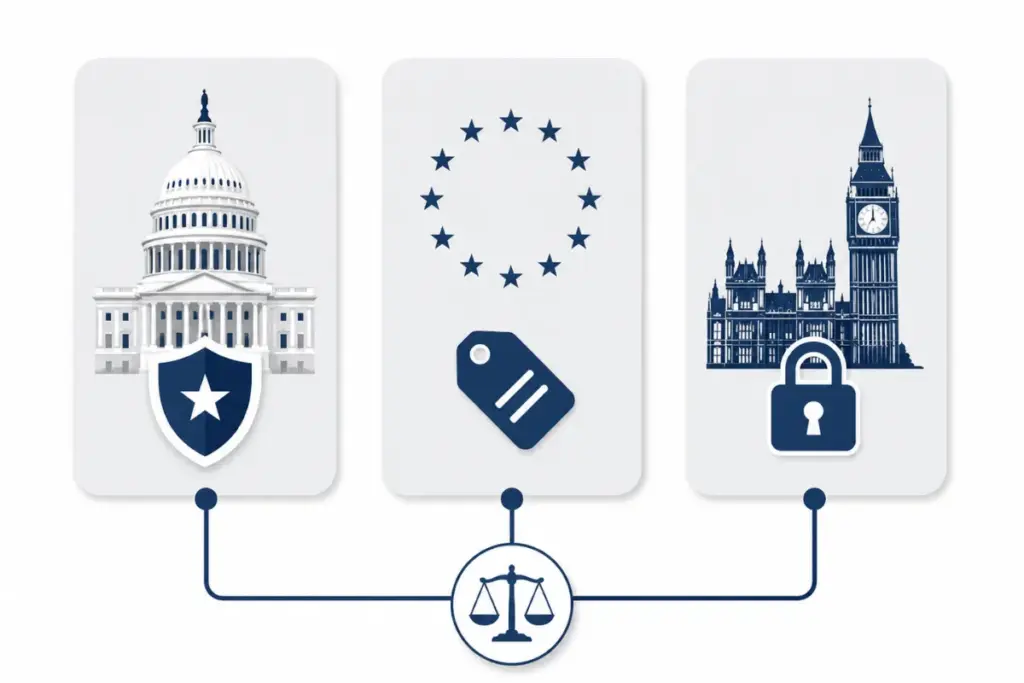
United States: Federal and State Laws
The biggest federal development is the TAKE IT DOWN Act (signed 19 May 2025). This law makes it a federal crime to knowingly publish non-consensual intimate imagery (NCII) including AI-generated deepfakes of any person. Penalties reach two years in prison for adult victims and three years when minors are depicted. Platforms must remove flagged content within 48 hours of a victim’s notice.
At the state level, 46 states have enacted laws covering sexually explicit deepfakes, and 30 states have laws targeting deepfakes in political communications. States like California, New York, and Tennessee have the broadest protections. However, deepfake law in the US varies widely some states impose criminal penalties, others provide only civil remedies, and a handful (notably Missouri and Ohio) still lack specific adult deepfake protections.
Most state election laws focus on disclosure requirements political ads using AI-altered content must carry a disclaimer. Some states have tried broader bans, but a federal judge struck down parts of California’s election deepfake law (AB 2839) in August 2025 on First Amendment grounds.
United Kingdom: Creation Alone Is Now a Crime
On 6 February 2026, Section 138 of the Data (Use and Access) Act 2025 came into force, amending the Sexual Offences Act 2003. It is now a criminal offence in England and Wales to intentionally create a “purported intimate image” of an adult without their consent even if you never share it.
Before this date, UK law under the Online Safety Act 2023 already criminalized sharing intimate deepfakes, but creating one was not itself a crime for adult victims. The new law covers AI-generated images, Photoshopped composites, and any digitally altered image that appears to show a real person in a sexual context. Requesting or paying someone else to create such an image is also an offence.
The Crime and Policing Bill 2025 also proposes criminalizing nudification apps tools designed to strip clothing from images of real people. For children, UK law has been stricter for longer the Coroners and Justice Act 2009 already makes it illegal to create, possess, or share any computer-generated indecent image of someone under 18.
European Union: Transparency and Labeling Rules
The EU takes a different approach. Rather than banning deepfakes, the EU AI Act (2024) focuses on transparency. Under Article 50, anyone who creates or deploys a deepfake must disclose that it was artificially generated. These rules apply starting 2 August 2026.
The definition is broad it covers any AI-created image, audio, or video that resembles real people or places in a way that could mislead someone. Even a realistic depiction of a fictional but natural-looking person can qualify. There is an exception for artistic or satirical content, but disclosure is still required.
Penalties can reach €15 million or 3% of worldwide annual turnover. Beyond the AI Act, the EU’s Digital Services Act (DSA) holds platforms accountable, and member states have their own criminal laws covering deepfake revenge porn and fraud.
Real-World Examples
The Texas high school case (US). Students used AI to create fake nude images of classmates from social media photos. The case directly inspired the TAKE IT DOWN Act. In April 2026, the first federal conviction under the Act was handed down an Ohio man who used AI to generate intimate images of adults and children in his neighborhood.
The Grok crisis (UK, January 2026). The AI tool Grok on X (formerly Twitter) was used to generate roughly three million sexualized deepfake images in weeks. The UK government fast-tracked enforcement of its deepfake creation law, and Ofcom opened a formal investigation into X under the Online Safety Act.
Election deepfakes (US, 2024–2026). During the 2024 presidential election, an AI-generated robocall impersonated President Biden and told New Hampshire voters not to vote. With 30 states carrying election deepfake disclosure laws into the 2026 midterms, campaigns face real consequences for using undisclosed AI face-swap or voice-cloning technology in political ads.
What People in This Situation Typically Do
- Request platform removal. Under the TAKE IT DOWN Act, platforms must remove flagged non-consensual intimate deepfakes within 48 hours of a verified victim notice. File a report through the platform’s reporting tool and reference the federal law if the response is slow.
- Document everything. Take screenshots with timestamps showing where the content appears and who created or shared it. This evidence is critical for both criminal complaints and civil claims.
- Report to law enforcement. If the deepfake is sexual or involves a minor, file a report with local police. In the US, 46 states have enacted specific deepfake laws that may apply. In the UK, contact the police and reference the Sexual Offences Act amendments.
- Use free digital removal tools. Services like StopNCII.org and the UK’s Report Remove tool create a digital fingerprint (hash) of the image. Participating platforms can then automatically detect and block the content without anyone needing to view the image again.
- Consult a lawyer for civil claims. Many jurisdictions allow victims to sue for damages. In the US, the DEFIANCE Act (which passed the Senate unanimously in January 2026 and remains pending in the House) would create a federal civil cause of action with damages starting at $150,000.
Tools That Can Help
No affiliate recommendations for this topic. Here are free official resources:
- StopNCII.org A free tool that creates a hash of intimate images to prevent them from being reshared across participating platforms.
- Report Remove (UK) Run by the Internet Watch Foundation, this service helps young people in the UK report and remove intimate images.
- Cyber Civil Rights Initiative (US) Offers a crisis helpline and a free guide for victims of non-consensual intimate imagery, including AI-generated content.
Related Articles
- The EU AI Act Explained For Regular People
- Who Owns AI-Generated Content? Copyright in the Age of AI
- Is AI Content Legal for Commercial Use?
Frequently Asked Questions
Is it illegal to make a deepfake of a celebrity? It depends on how it is used. Creating a non-consensual sexual deepfake of anyone celebrity or not is illegal under US federal law and UK law. Using a celebrity’s likeness commercially may also violate state right-of-publicity laws. Satire has some First Amendment protection in the US, but that does not extend to sexual or fraudulent content.
Are deepfake laws the same in every US state? No. As of mid-2026, 46 states have at least one deepfake law, but specifics differ widely. Some impose criminal penalties, others offer only civil remedies, and a few states still lack specific adult protections. The federal TAKE IT DOWN Act provides a national baseline for intimate deepfakes, but state laws fill gaps around political deepfakes and publicity rights.
What can I do if someone makes a deepfake of me? Report the content to the platform under US federal law, platforms must remove it within 48 hours. Document everything with screenshots and timestamps. File a police report if the content is sexual or involves a minor. Free tools like StopNCII.org can prevent the image from resurfacing. Many people in this situation also consult a lawyer about civil claims.
Does the EU AI Act ban deepfakes? Not outright. The AI Act requires transparency — anyone creating or using a deepfake must label it as AI-generated. These rules take effect on 2 August 2026. Failing to label can result in fines of up to €15 million or 3% of global turnover. Separate member state laws and the Digital Services Act address specific harms like non-consensual sexual content.
Understanding deepfake laws what is illegal in 2026 comes down to context. The technology itself is not banned, but the moment a deepfake is used to create non-consensual sexual content, deceive voters, or commit fraud, the law steps in and penalties are getting heavier every year.
This article is for educational purposes only and does not constitute legal advice. Laws vary by jurisdiction and change frequently. For advice specific to your situation, consult a qualified attorney.
Sources & Further Reading
- TAKE IT DOWN Act Full text (Congress.gov) The federal law criminalizing publication of non-consensual intimate deepfakes, signed May 2025.
- EU AI Act Article 50: Transparency Obligations (EUR-Lex) Official text of the EU regulation covering deepfake labeling and disclosure.
- UK Data (Use and Access) Act 2025 Section 138 (legislation.gov.uk) The UK law criminalizing creation of non-consensual intimate deepfakes.
- Public Citizen Tracker: State Legislation on Deepfakes in Elections Regularly updated tracker of US state-level deepfake election laws.