
Direct Answer: In California, an employment discrimination attorney helps workers who have been treated unfairly at work because of a protected characteristic such as race, gender, disability, or age. California’s Fair Employment and Housing Act (FEHA) gives workers stronger protections than federal law, and most employment lawyers take these cases on contingency, meaning no upfront cost. Finding the right attorney starts with understanding what your rights actually are.
Employment discrimination attorney california searches spike every time someone gets passed over, pushed out, or fired for reasons that feel deeply wrong. If your employer treated you differently because of who you are not what you did California law may give you more options than you realize. See also: AI Screening Job Applicants What Are Your Rights?
The Short VersionTL;DR
- California’s Fair Employment and Housing Act (FEHA) covers employers with five or more employees far broader than federal law’s 15-employee threshold
- Workers have three years to file a complaint with the California Civil Rights Department (CRD) significantly longer than federal deadlines
- Most employment discrimination attorneys in California work on contingency, so there is typically no fee unless the case wins
- Filing with the CRD is free and does not require an attorney, but legal representation generally improves outcomes in court
What Employment Discrimination Law Actually Says in California
In California, workplace discrimination is primarily governed by the Fair Employment and Housing Act (FEHA), codified at Government Code § 12900 et seq.
FEHA is broader than federal anti-discrimination laws in two important ways.
FEHA applies to California employers with five or more employees for discrimination claims materially broader than the federal Title VII threshold of fifteen. For harassment specifically, FEHA applies to employers of any size.
That means a startup with six employees, a small restaurant, or a family-owned business can all be subject to FEHA claims. Federal law specifically Title VII of the Civil Rights Act of 1964 would not even cover them.
FEHA currently protects employees from discrimination based on 16 separate characteristics, including race, color, religion, sex, gender identity, sexual orientation, national origin, disability, age (40+), marital status, military or veteran status, and effective January 1, 2024 reproductive health decision-making.
California courts also interpret FEHA more flexibly than federal courts interpret Title VII. FEHA courts allow plaintiffs to prove discrimination through context and circumstantial evidence without strict comparator requirements.
On timing: California’s FEHA has a three-year statute of limitations (extended from one year in 2020), and provides uncapped compensatory and punitive damages. Federal EEOC claims, by comparison, must typically be filed within 180 to 300 days.
The agencies involved
Two agencies handle discrimination complaints in California:
The California Civil Rights Department (CRD) formerly the Department of Fair Employment and Housing (DFEH) is the main state agency. The CRD stands as the largest state civil rights agency in the United States and is the institutional centerpiece of California’s commitment to protecting citizens from discrimination.
The federal Equal Employment Opportunity Commission (EEOC) handles claims under federal law. In many cases, workplace discrimination violates both state and federal laws. Workers can request “dual filing” of their complaint meaning the CRD will automatically share it with the EEOC.
For most California workers, filing with the CRD first makes more strategic sense, given the broader state protections and longer deadlines.
Real-World Examples
Scenario 1: Passed over for promotion
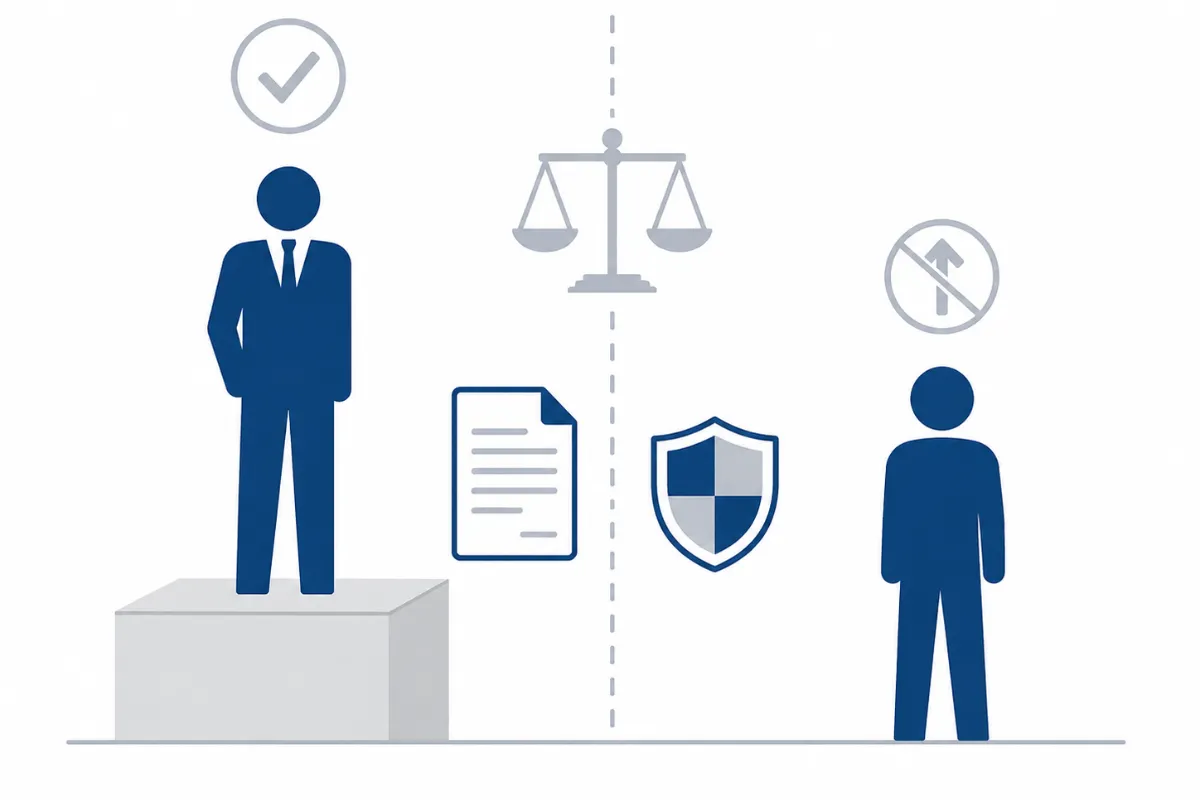
A Black engineer at a mid-size San Francisco tech company is consistently passed over for promotion despite strong performance reviews. White colleagues with fewer qualifications advance instead. The engineer documents the pattern over 18 months and eventually files a FEHA complaint with the CRD, alleging race discrimination under Government Code § 12940. A san francisco employment discrimination attorney reviews the case, finds a pattern of disparate treatment, and the matter proceeds to mediation.
Scenario 2: Fired after requesting pregnancy leave
A warehouse worker in Los Angeles informs her manager she is pregnant and needs a temporary schedule adjustment. Within three weeks, she is let go cited for “performance issues” that were never documented before her announcement. California law requires employers to provide reasonable accommodations for pregnant workers and prohibits discrimination against pregnant employees, which goes further than the federal Pregnancy Discrimination Act. An employer discrimination attorney takes the case on contingency.
Scenario 3: Disability discrimination at a small business
A customer service rep with a chronic pain condition requests a standing desk as a reasonable accommodation. The employer eight employees total refuses and later eliminates the position. Because FEHA covers employers with five or more workers, this falls within California’s protections even though federal disability law (the ADA) would not apply to a business this small.
What People in This Situation Typically Do
1. Write down everything. Before doing anything else, document the discriminatory incidents dates, what was said, who witnessed it, and how the employer responded to any complaints. Courts rely heavily on contemporaneous records.
2. File with the CRD. The CRD process is free of charge and does not require an attorney, making it accessible to employees who may not yet have legal representation. Workers file online through the California Civil Rights System (CCRS) portal. Filing with the CRD is a required step before suing in California state court.
3. Request a right-to-sue notice. Workers can request an immediate right-to-sue notice if they want to move faster. Once issued, they have one year to file a civil lawsuit in Superior Court. Many attorneys recommend requesting this immediately rather than waiting for the CRD to complete its investigation, because civil court provides broader discovery tools and remedies.
4. Consult an employment discrimination lawyer. Most employment discrimination lawyers in California offer free initial consultations. Because these cases are typically taken on contingency meaning the attorney is paid a percentage of any settlement or award, not an hourly rate there is usually no out-of-pocket cost to begin.
5. Evaluate your options. An attorney will assess whether the case is strongest under state FEHA, federal law, or both. California FEHA provides uncapped compensatory damages, uncapped punitive damages where the employer acted with malice, oppression, or fraud, and mandatory attorney’s fees to prevailing plaintiffs.
Tools That Can Help
California Civil Rights Department (CRD) Online Portal The free filing portal at calcivilrights.ca.gov is where workers initiate discrimination complaints in California. No attorney required to start.
California State Bar Lawyer Referral Service The State Bar of California runs a certified lawyer referral service at calbar.ca.gov where workers can find vetted employment attorneys, often with a reduced-fee initial consultation.
EEOC Public Portal For claims involving federally covered employers or federal-specific remedies, workers can file at publicportal.eeoc.gov. The EEOC portal also allows dual-filing with the CRD.
Related Articles
- AI Screening Job Applicants What Are Your Rights?
- Can Your Boss Watch You Work from Home?
- NDA for Tech Workers What You Can’t Be Silenced About
Frequently Asked Questions
How do I find an employment discrimination attorney in California? Start with the California State Bar’s certified lawyer referral service at calbar.ca.gov, which connects workers with vetted employment attorneys. Many California employment lawyers also advertise free consultations and take discrimination cases on contingency no fees unless the case succeeds. For Bay Area cases specifically, searching for san francisco employment discrimination attorneys through the bar’s referral tool filters by geography and practice area.
Are employment discrimination laws stricter in California than federal law? Yes, in several meaningful ways. California’s FEHA covers employers with five or more employees, compared to federal Title VII’s threshold of 15. The filing window under FEHA is three years versus 180 to 300 days under federal law. California also provides uncapped emotional distress and punitive damages, and awards mandatory attorney’s fees to employees who prevail. Many workers with valid claims file exclusively under FEHA because the state law offers stronger remedies.
What agencies handle discrimination complaints in California? The primary state agency is the California Civil Rights Department (CRD) formerly called the Department of Fair Employment and Housing (DFEH). The federal Equal Employment Opportunity Commission (EEOC) handles federal claims. Workers can request dual filing, which means the CRD automatically shares the complaint with the EEOC. Filing with the CRD is required before bringing a FEHA claim in California state court.
Can I sue my employer for discrimination in California without a lawyer? Technically, yes California law does not require a worker to have an attorney to file with the CRD or even to appear in Superior Court. However, employment discrimination cases are procedurally complex and employers typically have legal teams. Most workers find that having an employment discrimination attorney significantly affects the outcome, particularly in negotiating settlements and meeting court deadlines. Many attorneys take these cases at no upfront cost.
Conclusion
California gives workers some of the strongest employment discrimination attorney resources in the country broad state law, long deadlines, uncapped damages, and a free complaint process anyone can use. Whether a situation involves race, disability, pregnancy, or age, FEHA and the Civil Rights Department provide a clear legal path. Understanding the difference between state and federal protections is often the first step toward knowing what options actually exist.
This article is for educational purposes only and does not constitute legal advice. Laws vary by jurisdiction and change frequently. For advice specific to your situation, consult a qualified attorney.
Sources & Further Reading
- California Civil Rights Department (CRD) Official agency for filing FEHA complaints in California
- California Fair Employment and Housing Act Gov. Code § 12900 et seq. Full statutory text of California’s primary anti-discrimination law
- U.S. Equal Employment Opportunity Commission (EEOC) Federal agency for Title VII, ADA, and ADEA claims
- California State Bar Lawyer Referral Service Certified referral service for finding vetted employment attorneys
- CRD Right-to-Sue Instructions (January 2025) Official CRD instructions for obtaining a right-to-sue notice