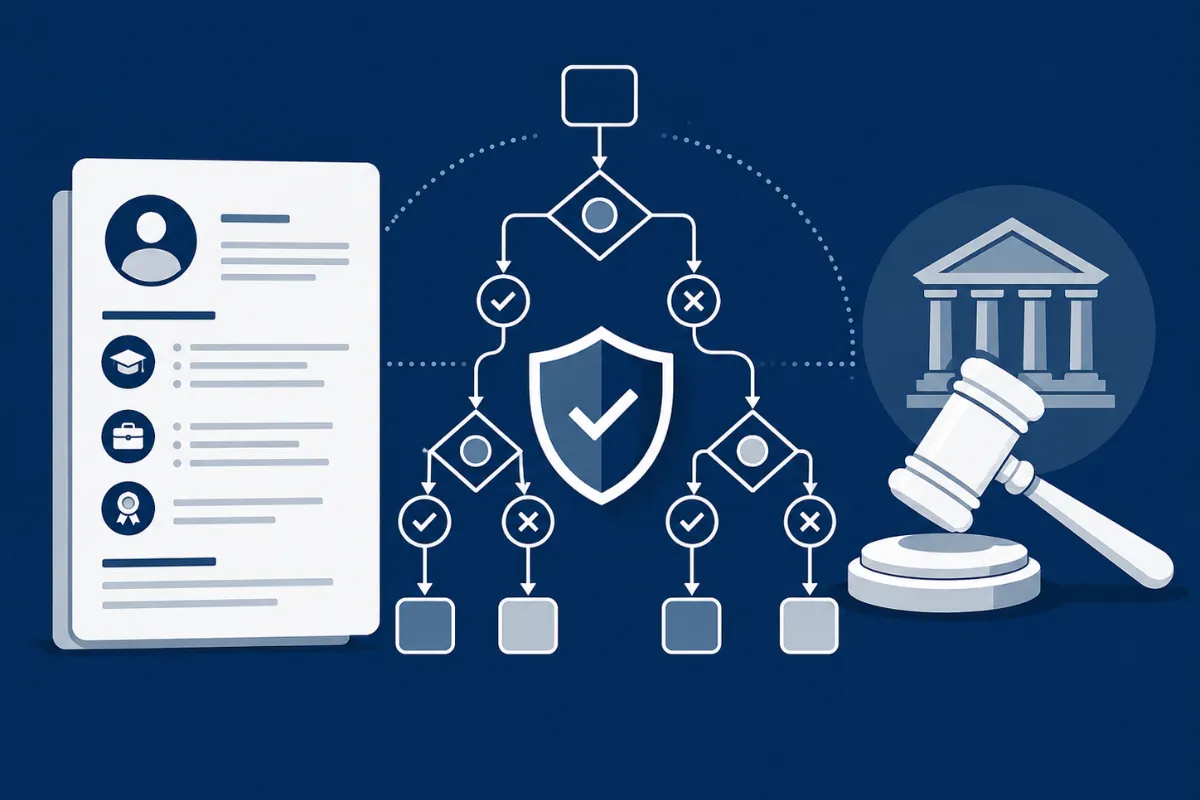
Direct Answer: Yes companies can legally use AI to screen and reject job applicants in most jurisdictions. However, that AI must not produce discriminatory outcomes based on race, sex, age, or other protected characteristics. In the US, existing civil rights laws apply to algorithmic tools. In the EU, the AI Act (2024) classifies hiring AI as high-risk, with binding rules now rolling in. Rights vary significantly depending on where the job is based.
AI hiring discrimination is already shaping who gets a job interview and who never hears back. Millions of applications are filtered by software before a human recruiter ever sees them. When an algorithm screens someone out, the company may still be legally responsible for that outcome. For context on how companies collect and use personal data in this process, see Can Companies Legally Sell Your Personal Data?.
The Short Version
- Companies can legally use AI to screen applicants, but the AI cannot produce outcomes that discriminate against protected groups race, sex, age, disability, and others
- In the US, federal laws including Title VII and the ADA apply to algorithmic hiring tools; there is no dedicated federal AI hiring law as of mid-2026
- In the EU, the EU AI Act (2024) classifies hiring AI as high-risk; emotion recognition in hiring has been banned since February 2025
- New York City already requires annual independent bias audits for automated hiring tools, with daily fines for non-compliance
What AI Hiring Discrimination Actually Means Under the Law
United States
There is no single federal law governing AI in hiring specifically. What exists is a set of older civil rights statutes that courts and regulators have extended to cover algorithmic tools.
Title VII of the Civil Rights Act (1964) prohibits employment discrimination based on race, color, religion, sex, and national origin. The Equal Employment Opportunity Commission (EEOC) the federal agency enforcing Title VII issued guidance in 2023 confirming these protections apply to AI-powered selection tools. That guidance was removed from the EEOC’s website in January 2025 following a change in administration. The underlying law did not change. Employers must still comply with Title VII regardless of whether the tool doing the screening is a human or a machine.
The Americans with Disabilities Act (ADA) creates similar obligations. If an AI tool disadvantages applicants with disabilities for example, by penalizing employment gaps that reflect medical leave that may constitute disparate impact discrimination. Disparate impact means a practice appears neutral on the surface but produces discriminatory outcomes for a protected group.
The Age Discrimination in Employment Act (ADEA) protects workers aged 40 and older. In May 2025, a federal court granted conditional class certification in a lawsuit alleging that Workday’s AI screening software discriminated by age, race, and disability across more than 100 job applications. Workday disclosed 1.1 billion applications rejected through its software — signaling that these cases can reach an enormous scale.
At the local level, New York City’s Local Law 144 in force since July 5, 2023 requires employers using an automated employment decision tool (AEDT) for NYC-based roles to:
- Commission an annual independent bias audit examining outcomes by race and sex
- Publish a public summary of audit results
- Notify candidates at least 10 business days before using the tool
- Offer an alternative assessment to candidates who request one
Fines start at $500 per violation and rise to $1,500 per day for repeated defaults. A 2025 Comptroller audit found enforcement had been largely ineffective, but the city has since committed to stronger oversight. California added state-level obligations under FEHA regulations on automated decision systems, effective October 2025.
European Union
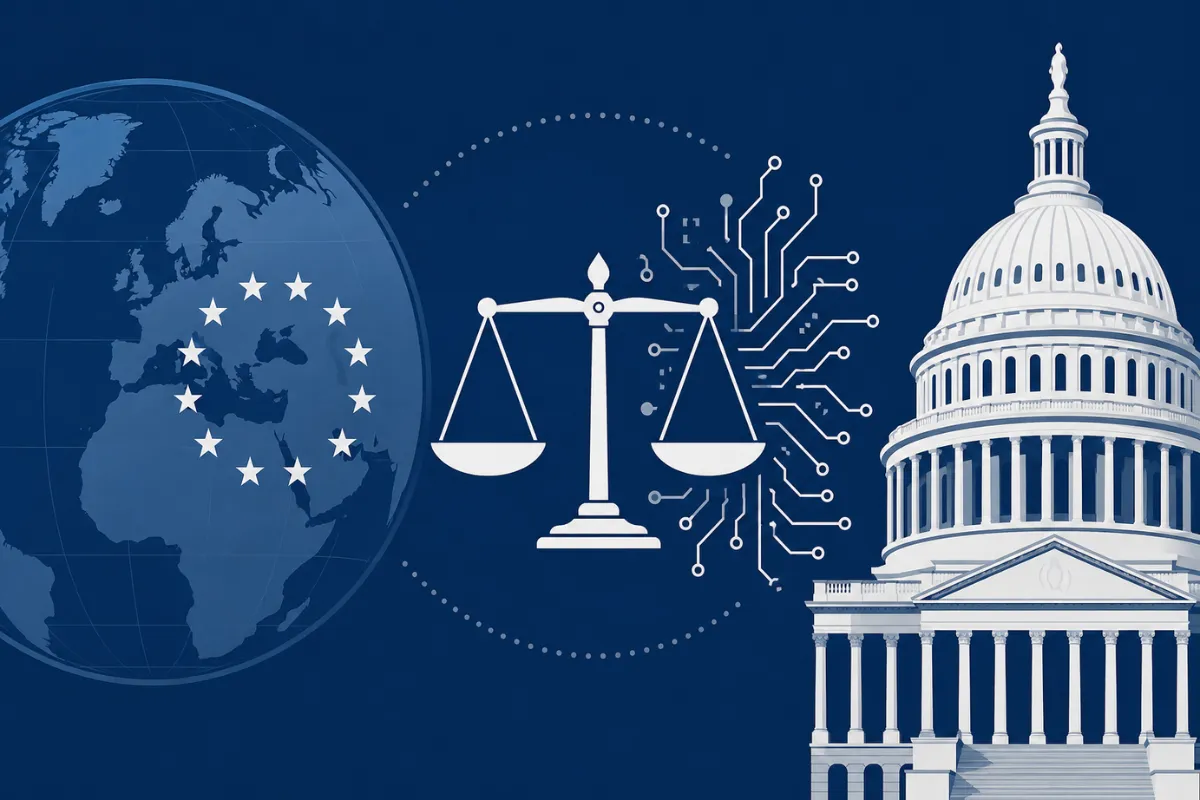
The EU AI Act (Regulation 2024/1689) takes a more structural approach. Under Annex III, AI systems used in hiring including résumé screening, candidate ranking, job ad targeting, and interview evaluation are classified as high-risk AI systems. This applies to any company using these tools to hire or manage EU-based workers, even if the company is headquartered elsewhere.
Key provisions already in force:
Since February 2, 2025: Certain AI practices are banned outright, including emotion recognition systems used in workplaces and AI that infers protected characteristics from biometric data. If a video interview platform scores candidates on facial expressions or tone of voice, that is now prohibited in the EU.
Since February 2, 2026: AI literacy obligations apply. Organizations using AI must make sure relevant staff understand its capabilities, limitations, and risks.
From August 2, 2026: Transparency obligations under Article 50 take effect companies must notify individuals when they are subject to high-risk AI decisions.
From December 2, 2027 (pushed back from August 2026 under the Digital Omnibus agreement of May 2026): Full high-risk obligations apply, including mandatory risk assessments, technical documentation, bias testing, human oversight, and continuous monitoring. Fines for violations can reach €15 million or 3% of global annual turnover.
United Kingdom
The UK’s Equality Act (2010) prohibits employment discrimination, and the same disparate impact principles apply to algorithmic tools. The UK has opted for a principles-based approach, relying on existing regulators to apply existing laws to AI rather than passing a standalone AI statute.
Real-World Examples
Résumé bias. Amazon scrapped an internal AI hiring tool in 2018 after discovering it downgraded résumés containing the word “women’s.” The tool had been trained on years of historical data that reflected existing gender imbalances.
Video interview scoring. Multiple platforms have offered AI tools that analyze facial expressions, eye contact, and tone of voice to score candidates. In the EU, any such tool inferring emotional states is banned since February 2025. In the US, no equivalent federal ban exists, though Illinois requires employers to obtain consent before using AI to analyze video interviews.
The Workday class action. One plaintiff applied to over 100 jobs and was consistently screened out by the same AI platform. In May 2025, age discrimination claims were certified as a collective action. The case signals that AI vendors not just the employers using them may face direct liability.
What People in This Situation Typically Do
- Request information. In NYC, employers must notify candidates that an AEDT was used and describe what data it evaluated. In the EU, GDPR Article 22 gives individuals the right to request human review of an automated decision and an explanation of the logic used. Many people in this situation start with a written data subject access request.
- File a complaint. In the US, hiring discrimination complaints including those involving AI tools can be submitted to the EEOC at eeoc.gov. The EEOC’s Strategic Enforcement Plan for 2024–2028 names AI-driven hiring as an enforcement priority. In the UK, complaints go to the Equality and Human Rights Commission (EHRC).
- Check bias audit records. Under NYC Local Law 144, employers must publish bias audit results publicly. Non-compliance with that requirement can itself be reported to the city’s Department of Consumer and Worker Protection.
- Document everything. Keep records of the application, automated responses, and all employer communications. Failure to notify candidates in NYC is itself a potential violation.
- Consult an employment attorney. Proving algorithmic discrimination is technically complex. An attorney can assess whether the facts support a formal complaint.
Tools That Can Help
No consumer privacy product applies to AI hiring discrimination claims. The relevant resources are official agencies:
- EEOC Charge System US employment discrimination complaints (eeoc.gov)
- National data protection authority EU GDPR rights and automated decision complaints
- Equality and Human Rights Commission UK discrimination complaints (equalityhumanrights.com)
Related Articles
- Who Owns AI-Generated Content? The Law Explained
- The EU AI Act Explained For Regular People
- Can Companies Legally Sell Your Personal Data?
Frequently Asked Questions
Is it legal for companies to use AI to screen job applications? Yes, in most jurisdictions. However, the AI tool must not produce outcomes that discriminate against protected groups. In the EU, hiring AI is classified as high-risk under the AI Act, with growing compliance requirements. In the US, Title VII and the ADA apply even though there is no dedicated federal AI hiring law.
Can I find out if an algorithm rejected my job application? It depends on where the job was based. In New York City, employers must notify candidates before using an automated decision tool. In the EU, GDPR Article 22 gives individuals the right to request human review of a purely automated decision and an explanation of the logic used. In most other US states, no current law requires employers to disclose that AI was involved.
What is a bias audit in AI hiring? A bias audit is an independent review of an automated hiring tool that measures whether it produces different selection rates for different demographic groups typically by race and sex. NYC Local Law 144 requires these audits annually, conducted by a third-party auditor, with results posted publicly. The goal is to detect disparate impact where a tool appears neutral but consistently disadvantages certain groups.
What can I do if I think AI discriminated against me in hiring? In the US, many people in this situation file a discrimination charge with the EEOC at eeoc.gov. In the EU, submitting a data subject access request under GDPR is often a first step, followed by a complaint to the national data protection authority if the request is refused. In the UK, the Equality and Human Rights Commission handles employment discrimination matters. Consulting an employment attorney before taking formal steps is advisable, as these cases typically require technical evidence about how the algorithm functions.
AI hiring discrimination is not a future concern it is already affecting applicants at scale. The legal protections are real but uneven. New York City has the strongest transparency rules currently in force in the English-speaking world. The EU’s framework is hardening fast, with major obligations landing between now and late 2027. In the US, the core civil rights protections remain on the books even as federal guidance has been pulled back and the Workday litigation suggests the courts may become the main accountability arena going forward.
This article is for educational purposes only and does not constitute legal advice. Laws vary by jurisdiction and change frequently. For advice specific to your situation, consult a qualified attorney.
Sources
- EU AI Act Regulation 2024/1689 (EUR-Lex) Full text of the EU AI Act, including Annex III high-risk classification for employment AI
- EEOC Strategic Enforcement Plan FY 2024–2028 (eeoc.gov) Identifies AI-driven hiring tools as an enforcement priority under existing federal law
- NYC Local Law 144 NYC DCWP Official guidance on the NYC bias audit requirement for automated hiring tools
- Title VII of the Civil Rights Act (Congress.gov) Federal anti-discrimination law applicable to algorithmic hiring tools
- GDPR Article 22 Automated Individual Decision-Making (EUR-Lex) Right to human review and explanation of automated decisions in the EU