Direct Answer: Online defamation happens when someone publishes a false statement about you on the internet that damages your reputation. Getting that content removed typically involves contacting the person who posted it, reporting it to the platform, filing a legal removal request with search engines like Google, or in serious cases pursuing a court order.
Online defamation how to take down content is one of the most common questions people ask after finding false statements about themselves or their business on social media, review sites, or blogs. Maybe a competitor left fake reviews on Google. Maybe an ex-employee posted lies on LinkedIn. Whatever the source, the damage is real and it can follow you for years if the content stays indexed in search results. The good news is that the law in the US, EU, and UK each provides tools to fight back, though the process looks different depending on where you live. If companies can profit from your personal information, it matters just as much to understand when someone profits from ruining your name something we covered in Can Companies Legally Sell Your Personal Data?.
The Short Version
- Defamation a false statement published to others that harms your reputation applies online just as it does offline.
- In the US, libel (written defamation) is the most common form of online defamation; platforms like Google and Yelp are generally protected from liability under Section 230 of the Communications Decency Act.
- In the UK, the Defamation Act 2013 requires proof of “serious harm” before a claim can proceed. In the EU, defamation laws vary by member state, but the right to erasure under GDPR offers an additional path for removing harmful personal data from search results.
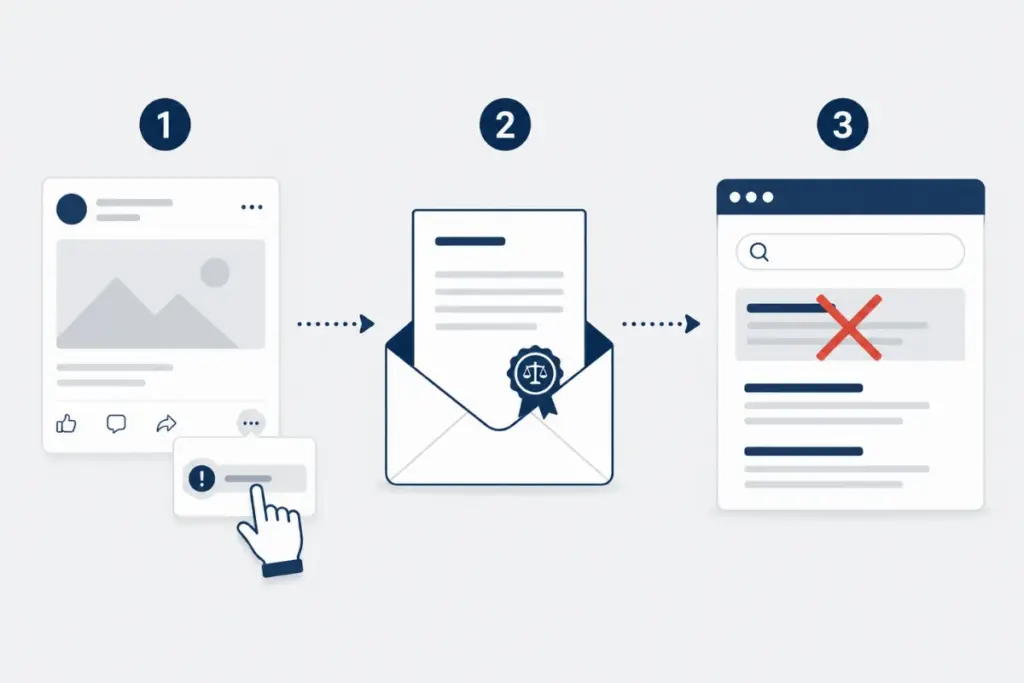
- Removal steps typically follow this order: contact the poster, report to the platform, file a legal removal request with search engines, and if needed get a court order.
What the Law Actually Says About Online Defamation
United States
In the United States, defamation is a state-level civil claim. A private individual generally must prove four things: the statement was false, it was published to at least one other person, the person who made it acted with negligence (or actual malice if the target is a public figure), and it caused real harm.
Written defamation is called libel. Spoken defamation is called slander. Since most online statements are written, most internet defamation cases fall under libel.
One major wrinkle: Section 230 of the Communications Decency Act (1996) generally protects platforms like Facebook, Google, and Yelp from liability for content posted by users. That means a defamation lawsuit targets the person who wrote the content, not the website hosting it.
United Kingdom
UK defamation law is governed by the Defamation Act 2013. The biggest change this law introduced is the “serious harm” threshold a statement is not considered defamatory unless it has caused, or is likely to cause, serious harm to the claimant’s reputation.
For individuals, this means more than hurt feelings or embarrassment. For businesses, “serious harm” means serious financial loss.
The Act also provides a notice-and-takedown defense for website operators (Section 5). If a website receives a complaint about user-generated content and follows the takedown procedure, the operator is generally not liable even if the content is defamatory.
The limitation period for defamation claims in England and Wales is one year from the date of publication.
European Union
Defamation laws in the EU vary by country France, Germany, and Ireland each have different rules. However, the EU provides a powerful additional tool: Article 17 of the GDPR (the right to erasure). Under this provision, individuals can request that search engines like Google remove links to content that is inaccurate, outdated, or irrelevant.
This is sometimes called the “right to be forgotten.”
The Digital Services Act (DSA), fully enforceable since 2024, also requires large platforms to act on reports of illegal content including defamatory material with clear notice-and-action mechanisms.
Real-World Examples
Fake reviews targeting a restaurant (Texas, 2024). A Dallas restaurant owner discovered that a competitor had created fake accounts to post negative reviews on Yelp and Google. The owner filed a defamation lawsuit, and IP address evidence linked the fake reviews to the competitor’s network. A jury awarded $750,000 in damages after evidence showed the fake reviews cost the restaurant roughly 40% of its business.
A doctor sued over false social media posts (Florida, 2025). A surgeon filed a defamation claim against a former patient who posted unverified malpractice allegations on Facebook groups. The patient could not prove the allegations were true. The court awarded $340,000 in compensatory damages plus $500,000 in punitive damages partly because the patient refused to take the posts down after receiving a cease-and-desist letter.
False reviews and the serious harm test (UK). Under the Defamation Act 2013, not every bad review qualifies as defamation. UK courts have consistently ruled that the claimant must prove the statements caused quantifiable reputational or financial damage not just annoyance. In cases involving small online disagreements, courts have found the serious harm threshold was not met, discouraging frivolous lawsuits.
What People in This Situation Typically Do
- Save the evidence. Take screenshots with timestamps, save URLs, and note any engagement (likes, shares, comments) before the post can be deleted or edited.
- Contact the person who posted it. A calm, direct request explaining that the statement is false and harmful sometimes works. Many people remove content when asked privately.
- Report it to the platform. Most social media sites and review platforms have policies against false or harassing content. Filing a report through the platform’s built-in tools is often the fastest first step.
- Send a cease-and-desist letter. A formal legal letter from an attorney carries more weight. It puts the poster on notice that continued publication could result in legal action.
- File a legal removal request with Google. Google accepts requests to remove content that violates local defamation or privacy laws. The request goes through Google’s Legal Help portal, where a review team evaluates the claim. In the EU and UK, individuals can also submit a right to be forgotten (de-referencing) request to have links removed from search results tied to their name.
- Pursue a court order. If other methods fail, a court can declare the content defamatory and order its removal. In the US, a court order is often needed before Google will de-index defamatory content. Each search engine Google, Bing, Yahoo must be contacted separately.
Tools That Can Help
- DeleteMe Scrubs personal information from data broker sites, reducing how much of your data is publicly available for bad actors to find.
- Incogni Sends automated removal requests to data brokers on your behalf, keeping your personal details out of people-search databases.
These tools do not remove defamatory posts directly, but they limit the personal information available about you online.
Related Articles
- Can Companies Legally Sell Your Personal Data?
- Terms of Service What You’re Actually Agreeing To
- What Is Section 230 and Why Does It Matter?
Frequently Asked Questions
What is the difference between libel and slander online?
Libel is written defamation this covers social media posts, blog comments, online reviews, and forum threads. Slander is spoken defamation, which can apply to podcasts or video content where someone makes false claims verbally. Since most internet content is text-based, the vast majority of online defamation cases are classified as libel. The legal distinction matters because, in many jurisdictions, libel does not require proof of specific financial loss, while slander often does.
Can I sue someone for a negative review?
It depends on whether the review contains false statements of fact. Opinions even harsh ones are generally protected speech. But if a reviewer states something provably false (like claiming a restaurant failed a health inspection when it did not), that may qualify as defamation. In the US, the reviewer is the target of the lawsuit, not the platform hosting the review, because Section 230 generally shields platforms from liability. In the UK, the Defamation Act 2013 requires proof that the false review caused “serious harm” to your reputation or finances.
How do I file a DMCA or legal request to remove content?
A DMCA takedown applies specifically to copyright infringement, not defamation. For defamation, the process is different: visit Google’s Legal Help page, select “Legal reasons to report content,” and provide the specific URLs, an explanation of why the content is false, and supporting evidence. Google reviews each request against the defamation laws in your country. In the EU and UK, you can also file a right-to-erasure request under GDPR.
Is it defamation if someone posts my private information?
Not exactly. Posting private information like your home address, phone number, or financial details is typically a privacy violation (sometimes called doxxing), not defamation. Defamation requires a false statement that harms your reputation. However, if someone posts your private information alongside false claims about you, both defamation and privacy laws may apply. In the EU, the GDPR gives individuals the right to request removal of personal data that is processed without a lawful basis. In the US, some states have anti-doxxing statutes, and the 2025 Take It Down Act addresses certain categories of non-consensual content.
Understanding online defamation how to take down content starts with knowing the law in your jurisdiction, documenting the false statements, and choosing the right removal path whether that means a platform report, a legal request to Google, or a formal court order. The law treats false statements seriously in every major jurisdiction, but the rules and timelines differ. Taking action early before content spreads further gives the best chance of a successful outcome.
This article is for educational purposes only and does not constitute legal advice. Laws vary by jurisdiction and change frequently. For advice specific to your situation, consult a qualified attorney.
Sources & Further Reading
- Google Legal Help Report Content for Legal Reasons Google’s official portal for submitting legal removal requests
- Defamation Act 2013 (UK) Full text of the UK’s primary defamation statute
- 47 U.S. Code § 230 Communications Decency Act The federal law that shields internet platforms from liability for user-posted content
- EUR-Lex GDPR Article 17 (Right to Erasure) The EU regulation providing the right to request data deletion
- Digital Services Act EUR-Lex The EU regulation requiring platforms to act on illegal content reports